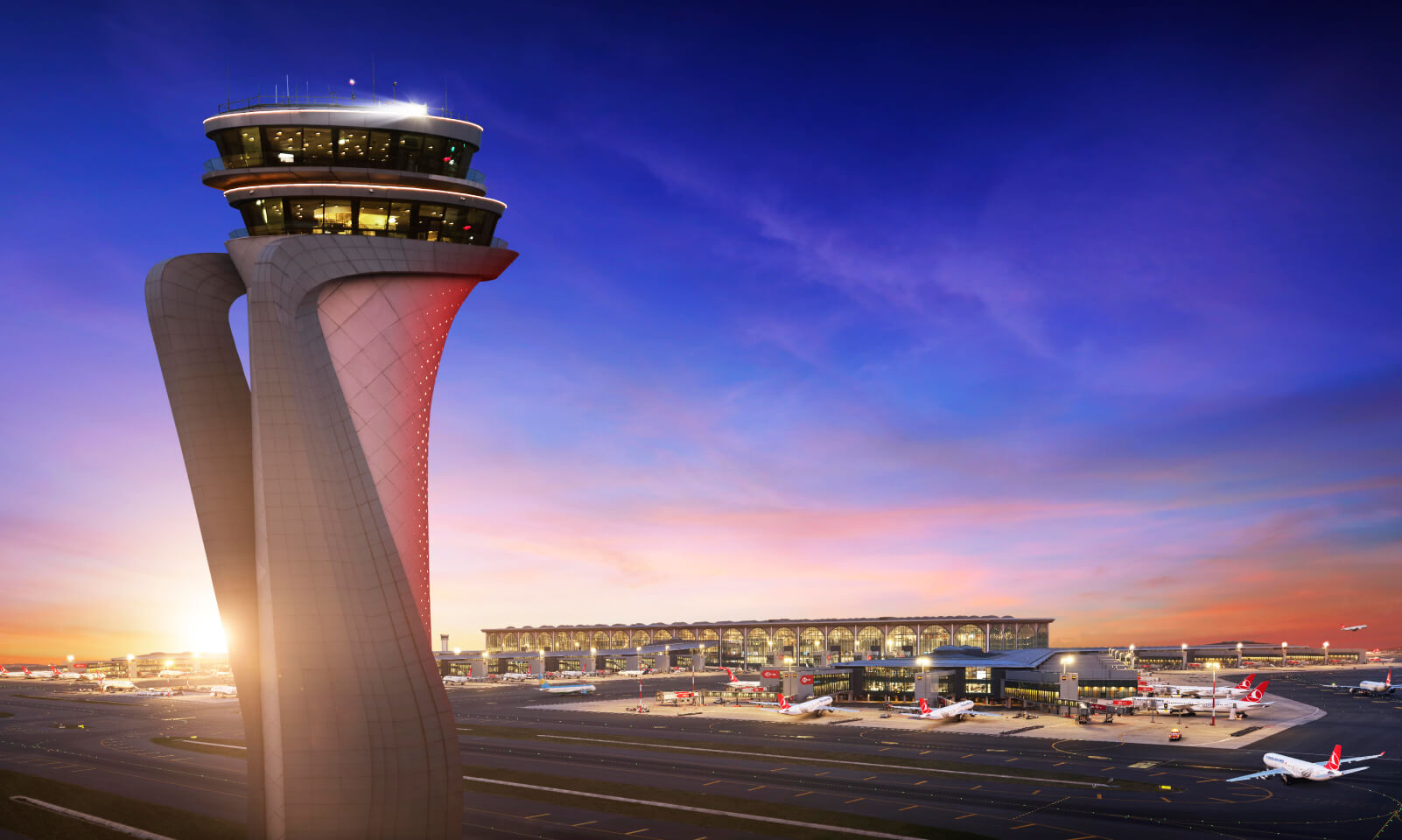
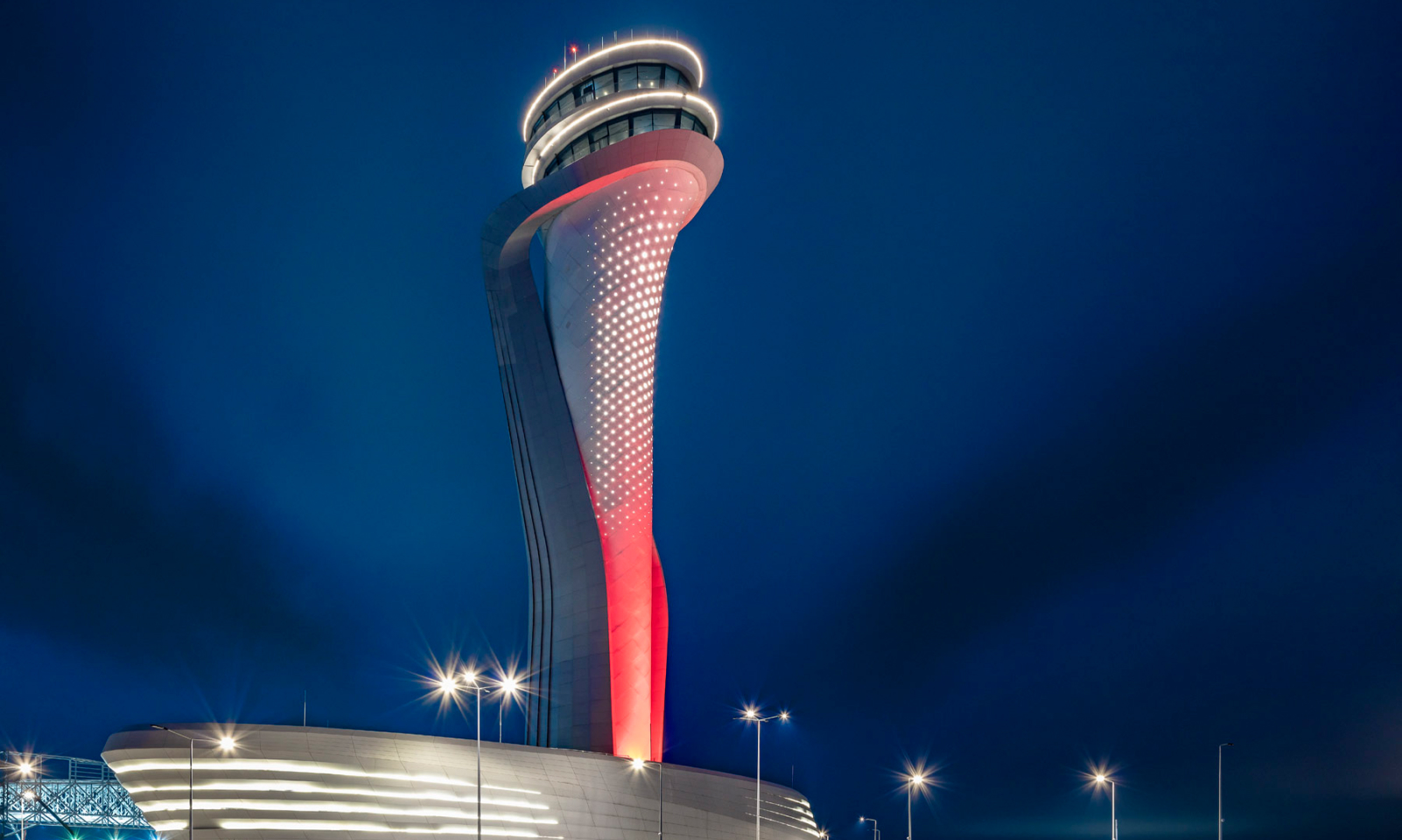
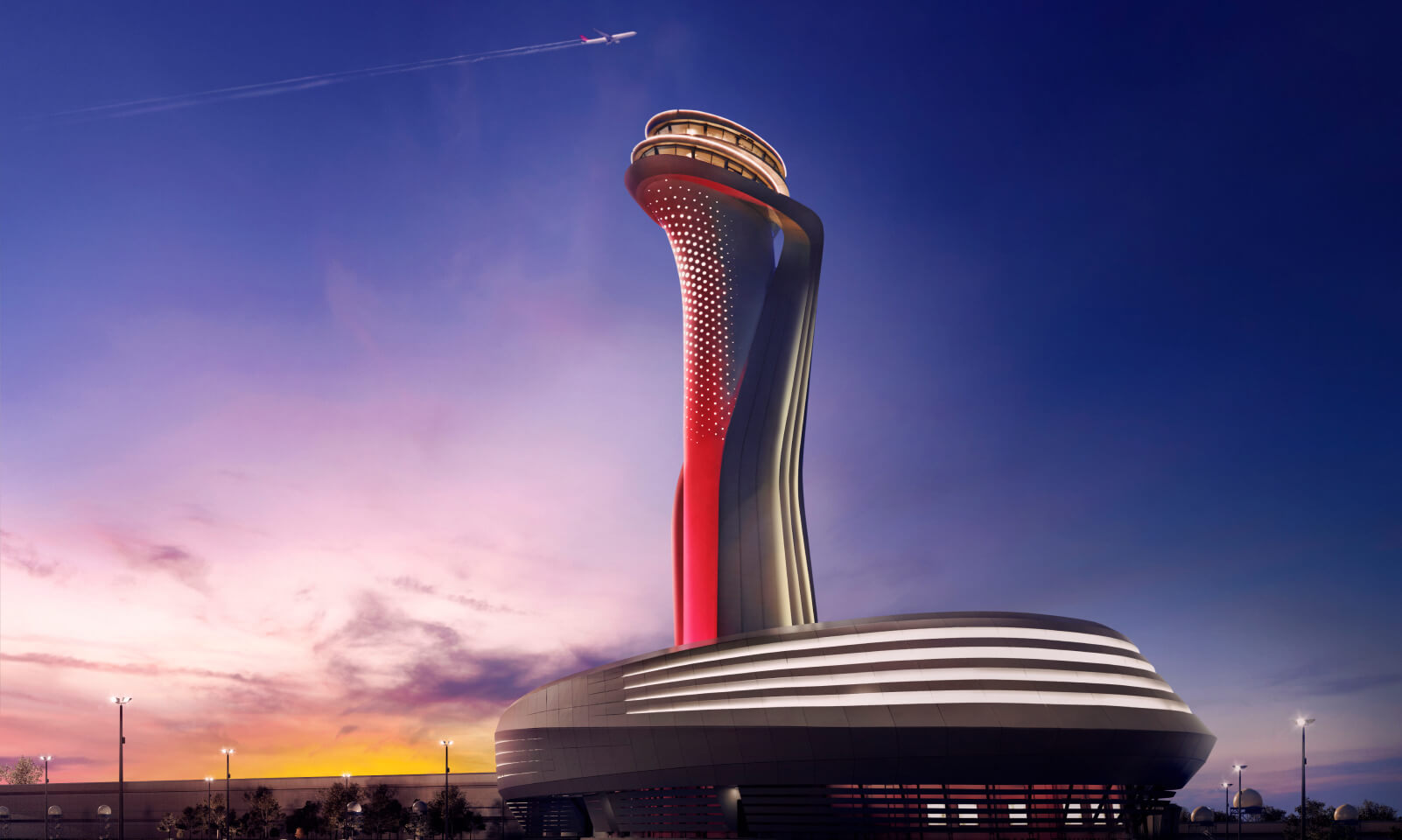
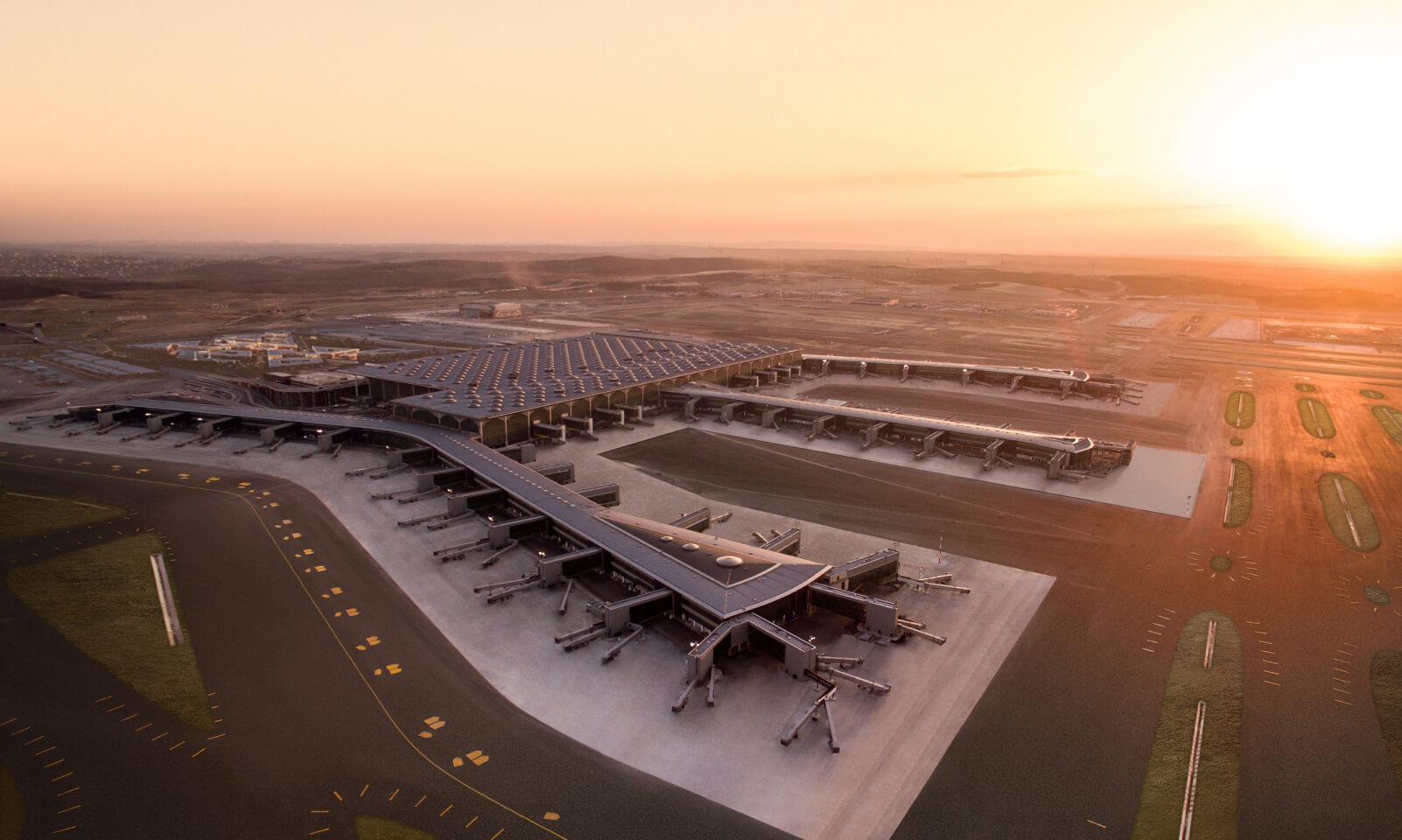
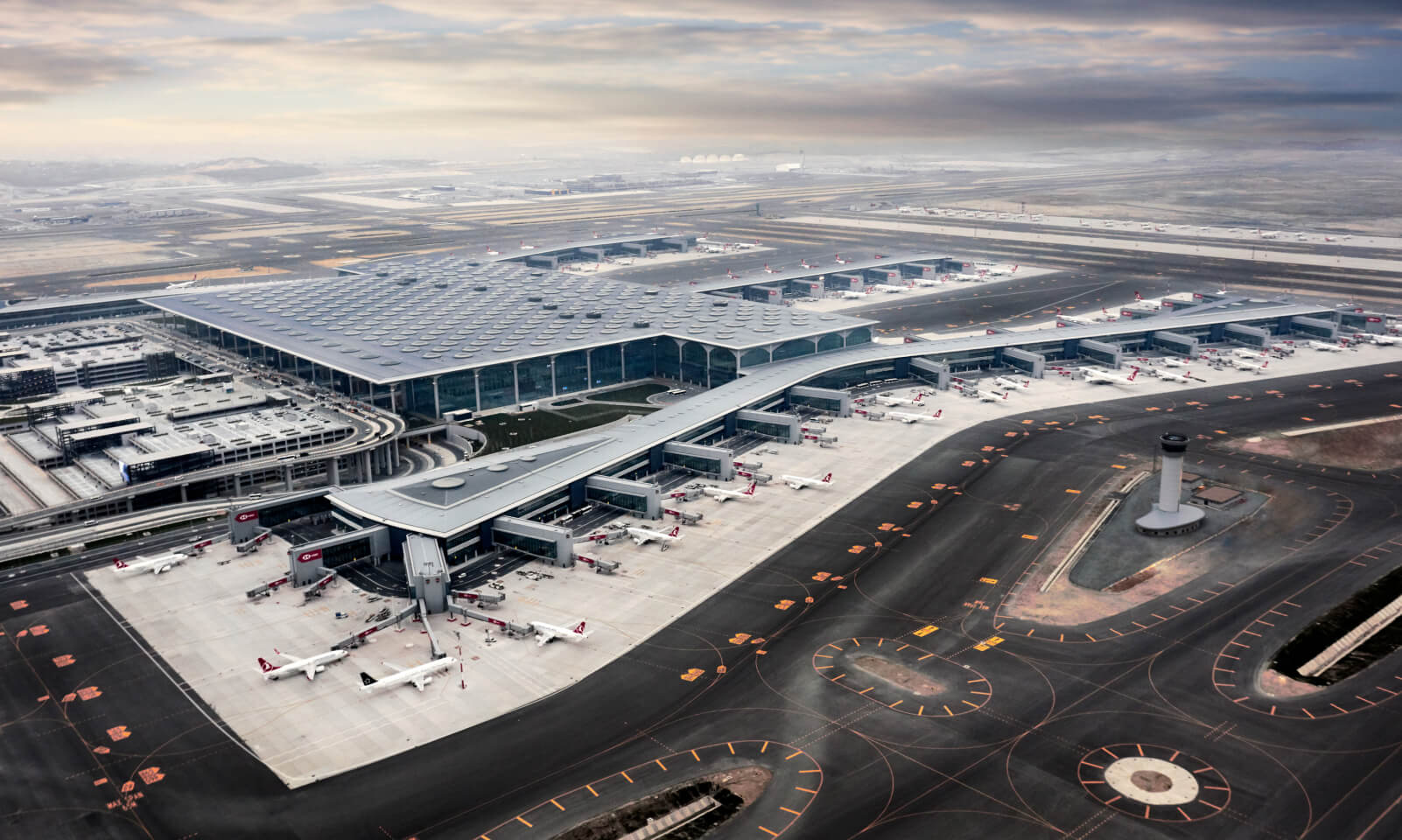
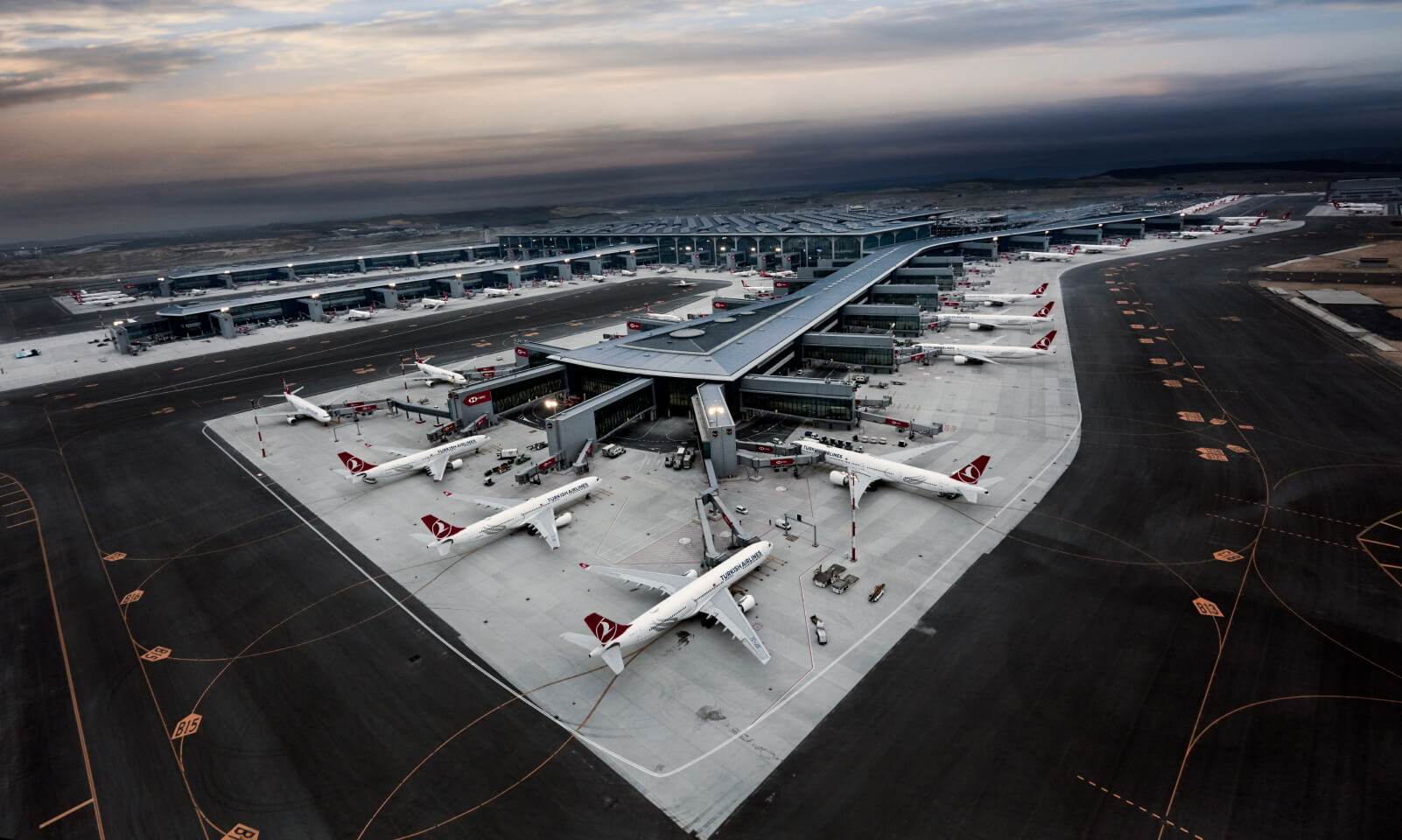
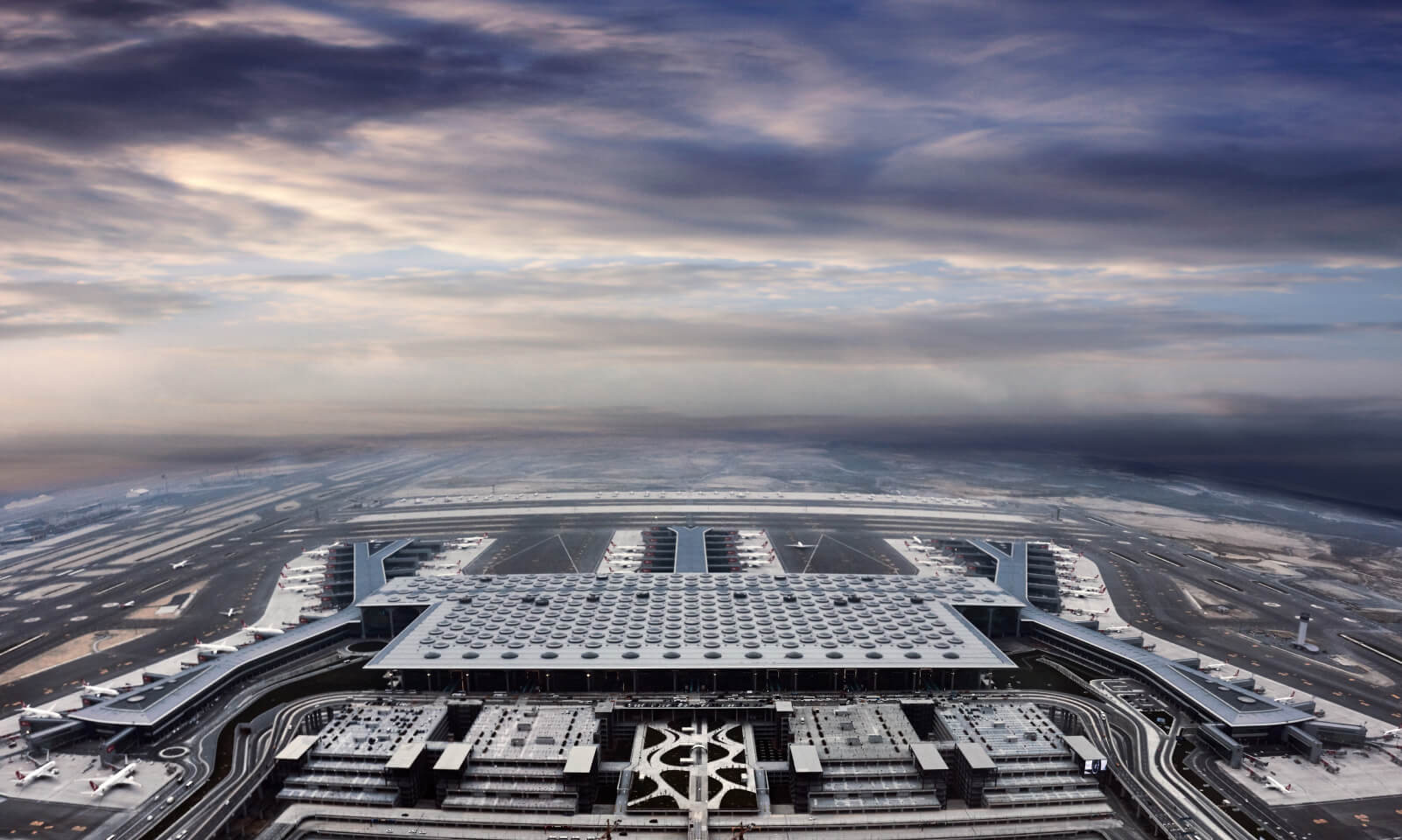
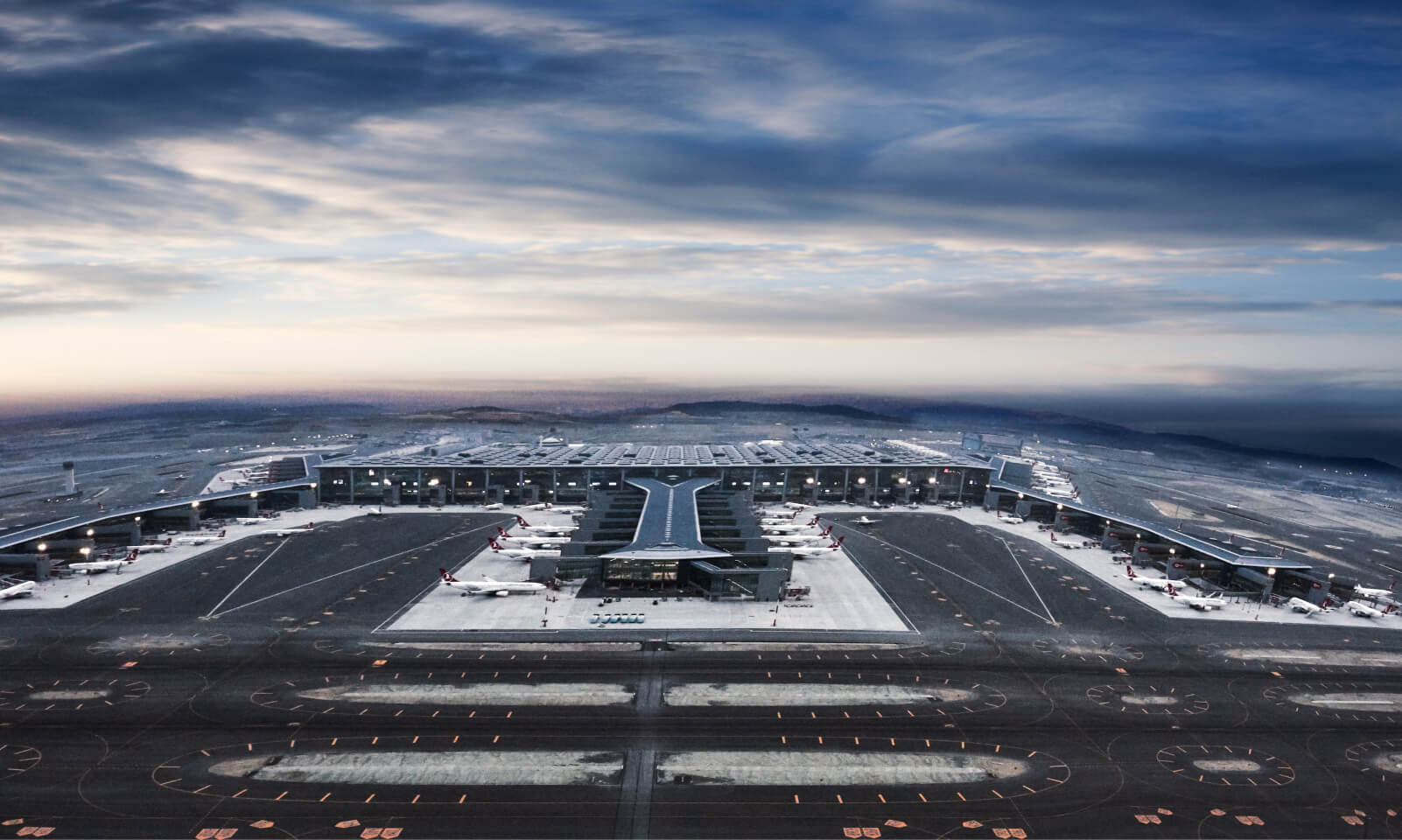
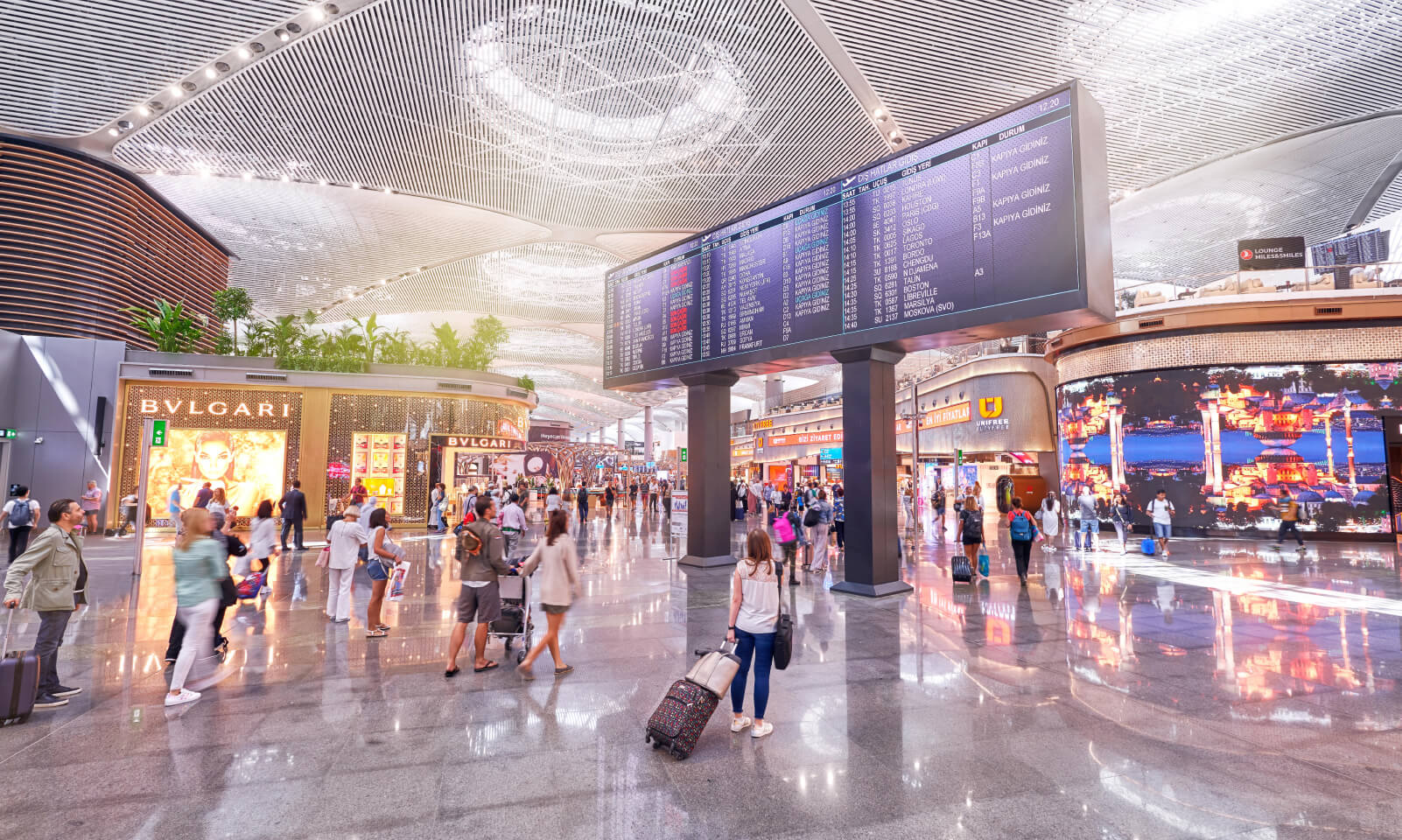
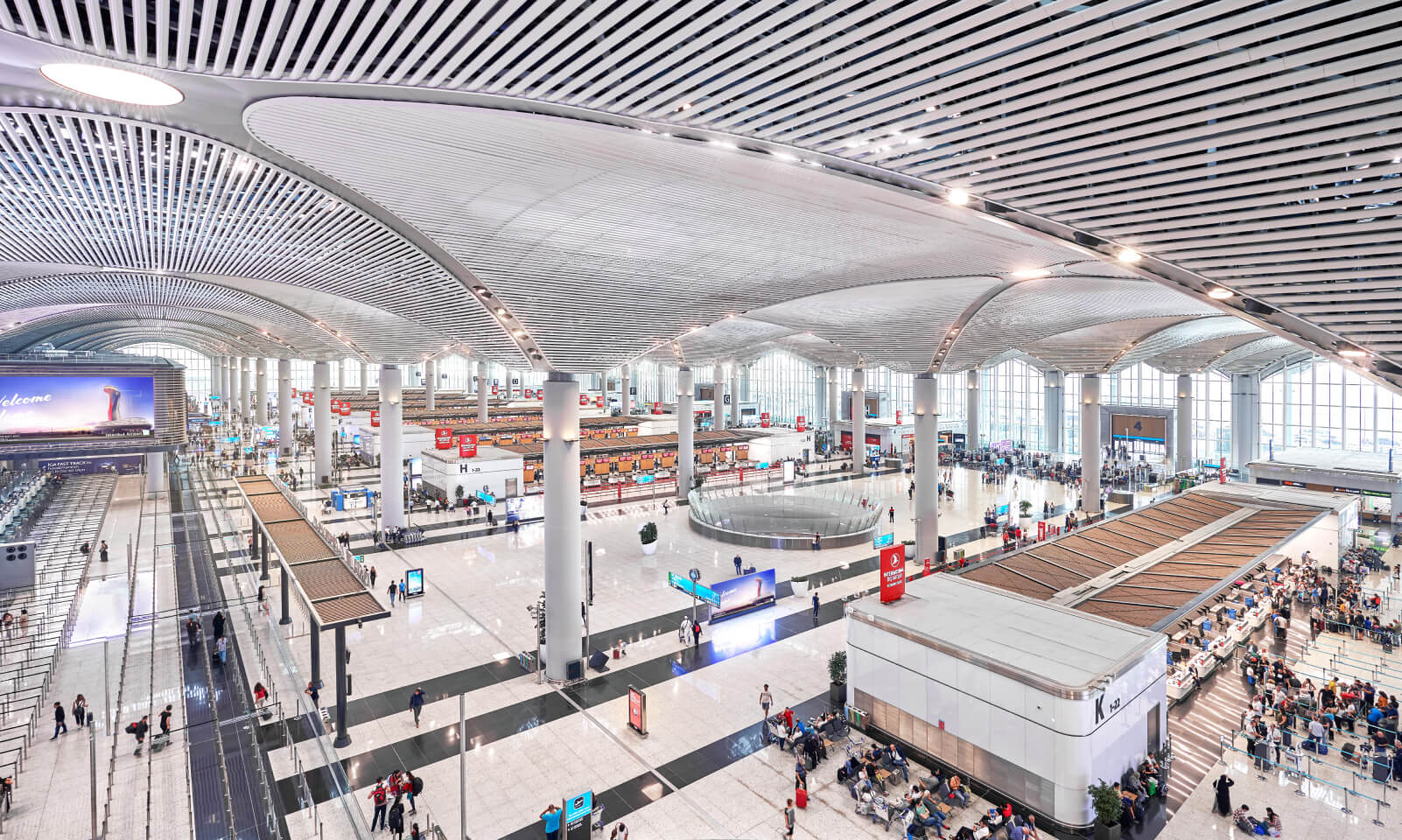
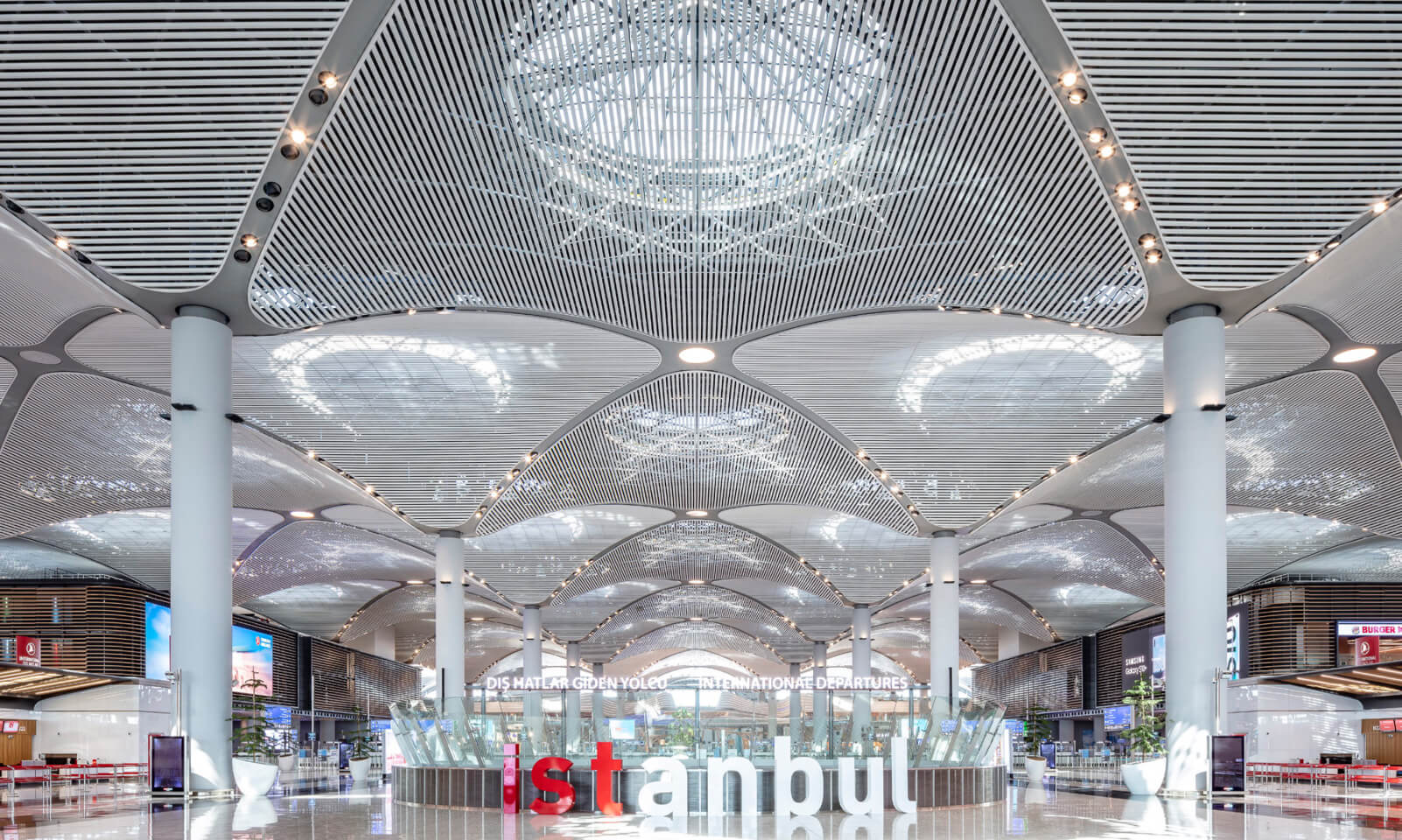
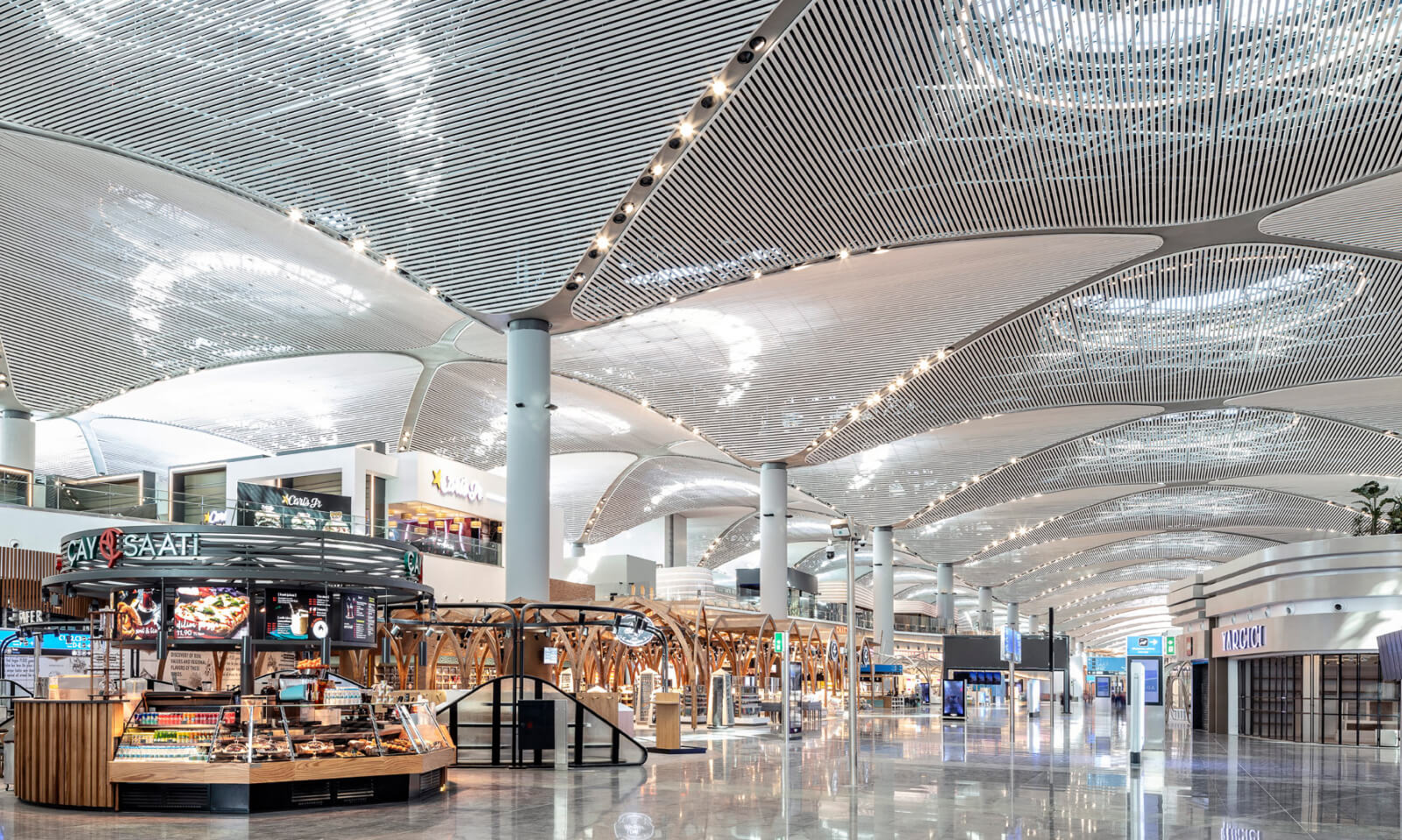
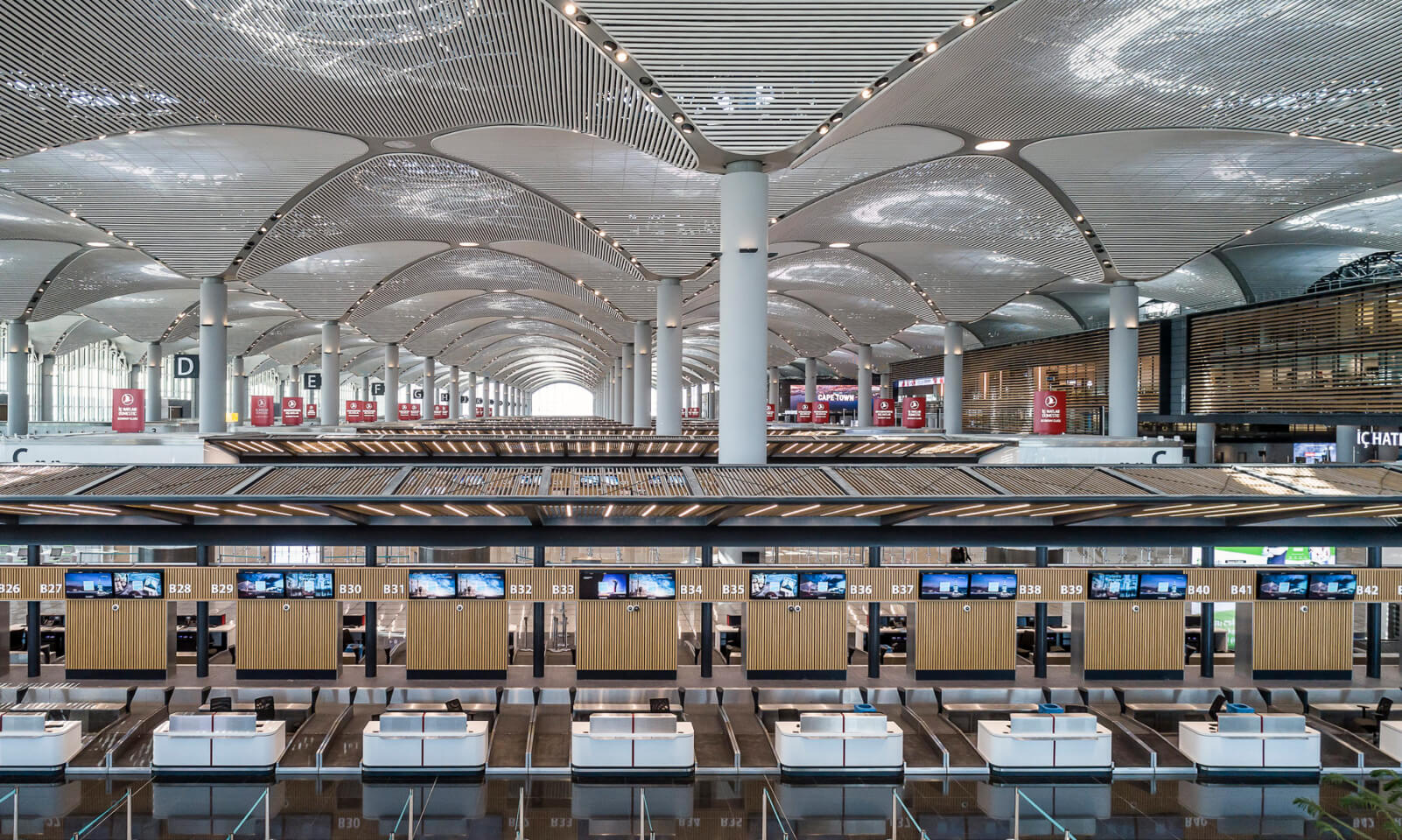
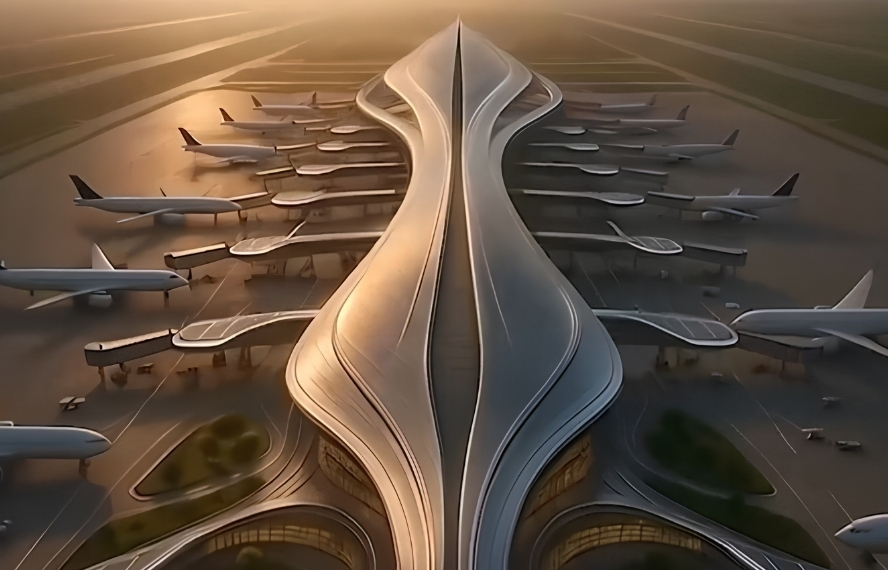
Built on the Black Sea coast north of Istanbul, Istanbul Airport is one of the most prestigious infrastructure projects in Türkiye and worldwide. Launched on 1 May 2015, it entered civil aviation history by being completed in a record 42 months.
Airport Projects
Istanbul Airport
Istanbul Airport
One of the world's most important hubs for global air traffic
Istanbul, Arnavutköy, Black Sea coast
A record construction period of 42 months


Highlights

Location
Istanbul, Arnavutköy, Black Sea coast

Client/Employer
Devlet Hava Meydanları İşletmesi Genel Müdürlüğü

Project Scale
Record construction period of 42 months, Türkiye's largest infrastructure investment
Project Scale
76.5 Million Square Meters of Airport City Area
Project Scale
1 Million Square Meters of Parking for 40,000 Vehicles
Project Scale
77 Passenger Boarding Bridges
Project Scale
566 Check in Counters
Project Scale
228 passport control counters are available.

Function and Capacity
Annual capacity of 90 million passengers, with expansion potential up to 200 million.

Strategic Feature
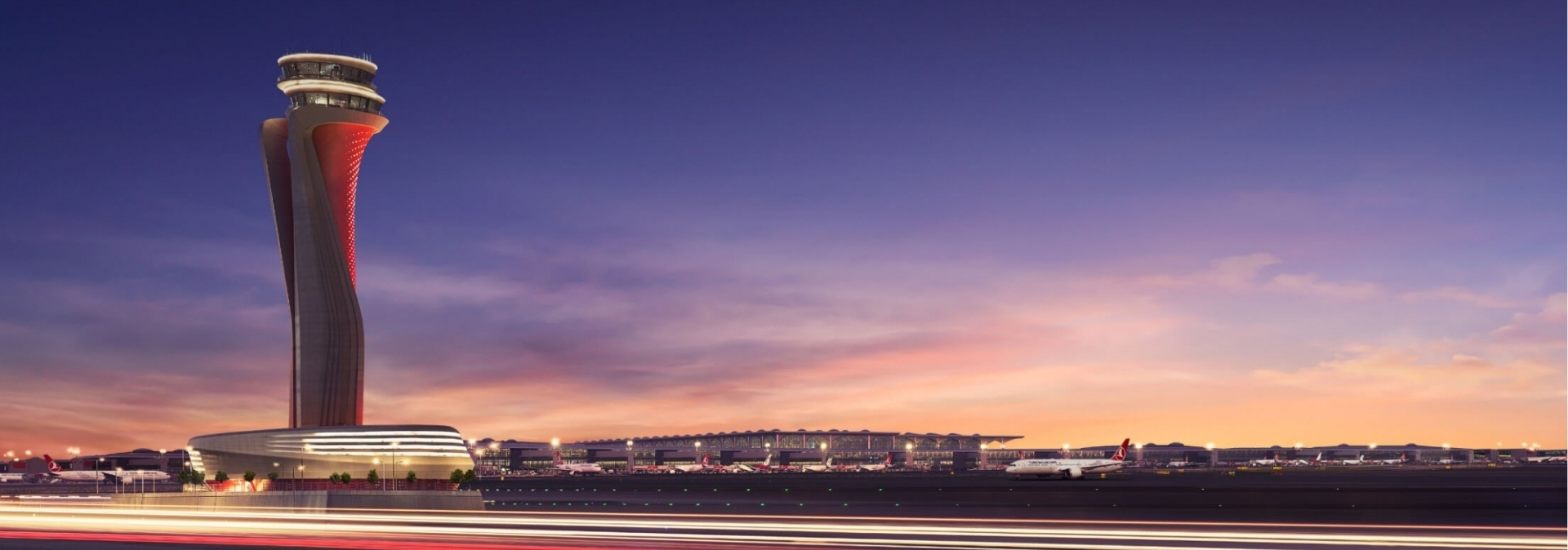
Three independent runways, air traffic control tower and cargo facilities; a global transfer hub
Technologies and Innovations Used


Special Solutions


Project Stages
Construction Stages
01
2015 to 2016: Infrastructure preparation → over 1 million m³ of excavation and filling,
02
2016 to 2017: Terminal foundations and structural construction
03
2016 to 2018: Runways, taxiways, cargo facilities and technical infrastructure
04
2018: Interior finishes, electromechanical systems and security infrastructure
05
29 October 2018: Official opening on the Republic's 95th anniversary
Solutions

Simultaneous management of over 30,000 workers and thousands of machines

Logistical planning: controlled flows of millions of tonnes of asphalt, steel and concrete

Safe infrastructure through ground improvement and environmental measures

Record completion in 42 months through parallel work schedules

Sustainability
Construction Period

Carbon emissions were reduced through material logistics and a local procurement strategy.

Monitoring systems for noise, dust and vibration were introduced.

Excavated soil was used in landscaping, creating 1.8 million m² of green space.

Environmental impact management included site practices reducing water and energy use.
Energy

A 200 MW solar power plant investment to meet the airport's electricity needs will enter operation in 2026; once completed, approximately 90% of consumption will be supplied from renewables.
There is a Net Zero Carbon target for 2050.

Level 3+ / Level 4 Transition was achieved in ACI Europe's Airport Carbon Accreditation program.
Energy efficiency significantly reduced annual carbon intensity during operation.
Waste Management and Circular Economy

More than 30 waste categories are separated within the terminal; the current recycling rate is approximately 30% to 35%.
The recycling target for 2030 was set at 50%.

Waste management fully complies with the national Zero Waste system.
Water Management

A substantial share of water used in the terminal is recovered through greywater recycling systems.

Using treated water for landscape irrigation reduces mains water consumption.
Low flow fixtures and automation systems are used for water efficiency.
Biodiversity and Ecology

Over 300,000 trees were planted as part of rehabilitation for the surrounding ecosystem.

Radar systems monitoring bird movements are used for wildlife management.
Indoor green spaces and sustainable plant greenhouses supporting natural vegetation were established in the terminal.
Social Sustainability

Istanbul Airport has infrastructure meeting Accessible Airport standards.

Local development programs include beekeeping, women's employment projects and vocational training.

International occupational health and safety standards are applied to operational teams.
Designed for 90 million passengers annually, the airport is unique worldwide in its expansion potential up to 200 million. The 1.4 million m² terminal under one roof highlights architectural design, functionality and passenger experience together. With three independent runways, a modern air traffic control tower, cargo facilities and support buildings, Istanbul Airport is a global connection hub linking Europe, Asia and the Middle East.
Gallery